Blog
Pedestal for sculpture: which model for which artwork?


A pedestal is not chosen by eye. Three figures settle it — the height of the artwork’s point of interest, its footprint, its weight — and they almost always point to a single model in a range. The rest is taste.
This guide walks through the situations that come up most often — a single piece, a series of works, a display case, a heavy load — and shows the matching models from our steel range, made in France.
Pedestal, base, plinth: the same object?
The three words describe the same support but not quite the same use, and it is worth being clear before comparing models.
- Base: the generic term. Anything that raises and supports a work, from a 5 cm riser to a 100 cm column.
- Pedestal: a tall, slender base, made to bring a piece up to eye level. It is the word of the museum and the gallery.
- Plinth: the exhibition term, often used for the same object — and, in older usage, for the block a sculpture is carved onto.
In practice: search for “pedestal for sculpture”, “sculpture base” or “display plinth” and you will land on the same products. What really separates them are the four parameters below.
Four questions to settle before buying
1. What height? A standing visitor’s eye sits at around 148 cm. The rule: pedestal height = 148 cm minus the height of the work’s point of interest — the face of a bust, the gesture of a figure, the top of an abstract form. A bust whose face sits 48 cm above its base therefore calls for a 100 cm pedestal.
2. What top plate? The footprint of the work, plus 3 to 5 cm on each side. Below that, the piece overhangs visually. Far above it, the support starts competing with the work. Our plates run from 19 to 38 cm.
3. What load? Every model is rated for 50 kg per pedestal under distributed load. That is ample for a hollow bronze, a terracotta or a resin; beyond it, you move to a bespoke build.
4. One or several? A single piece calls for a single pedestal. Three or four works in the same room call for a nesting set: the staggered heights create rhythm, and the bases stack inside one another for transport and storage.
A single pedestal, for a single piece
This is the most common case: one sculpture to present, in a living room, an entrance hall or a gallery. You are looking for a 100 cm support, wide enough for the work and discreet enough to disappear behind it.
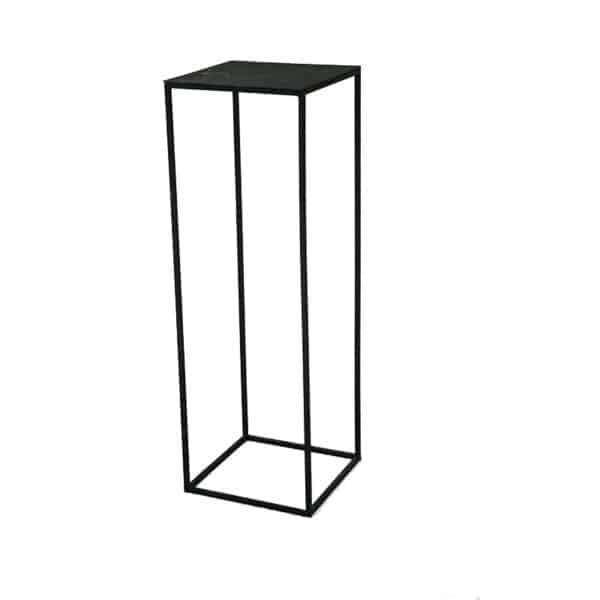

Contemporary metal pedestal – Solitaire
Original price was: 199,00€.150,00€Current price is: 150,00€.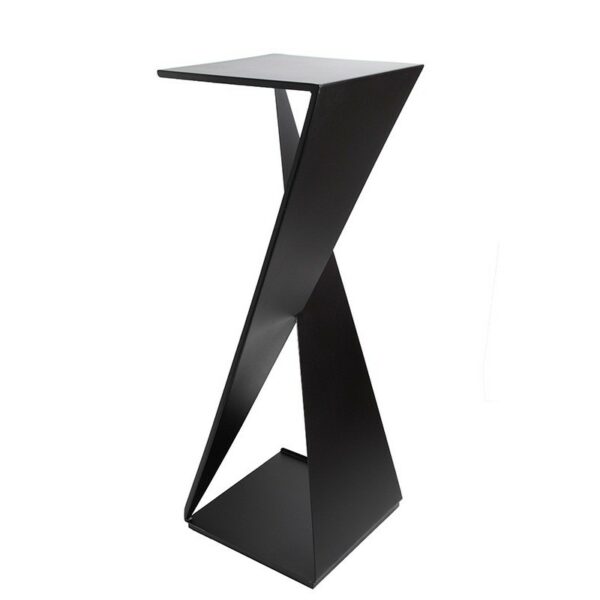
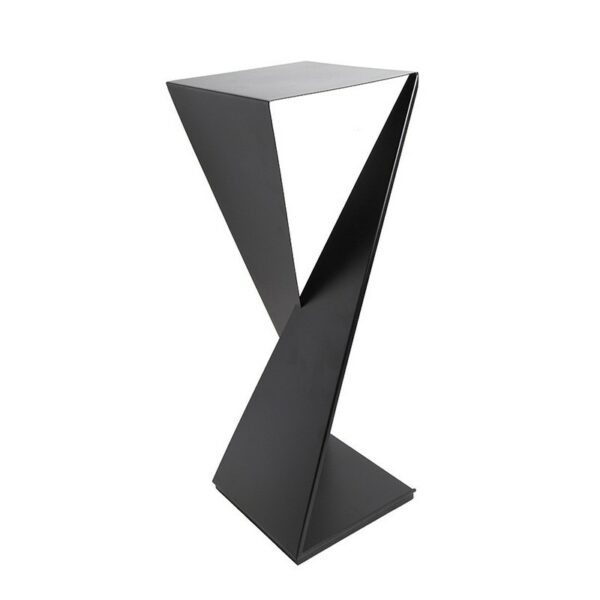
Contemporanio
Original price was: 379,00€.288,00€Current price is: 288,00€.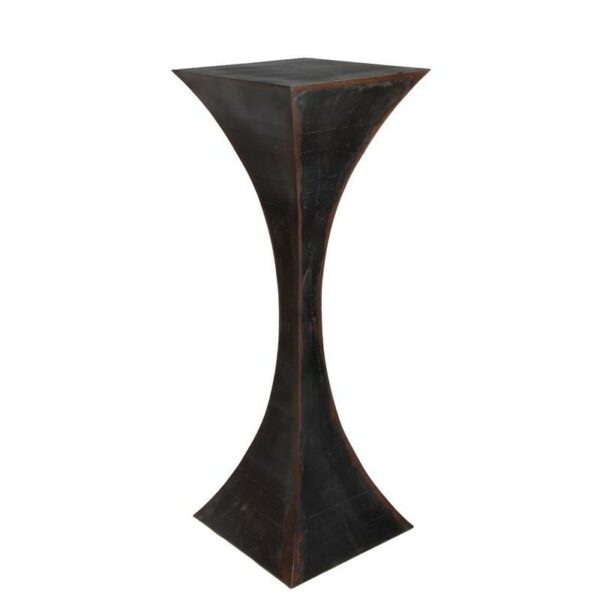
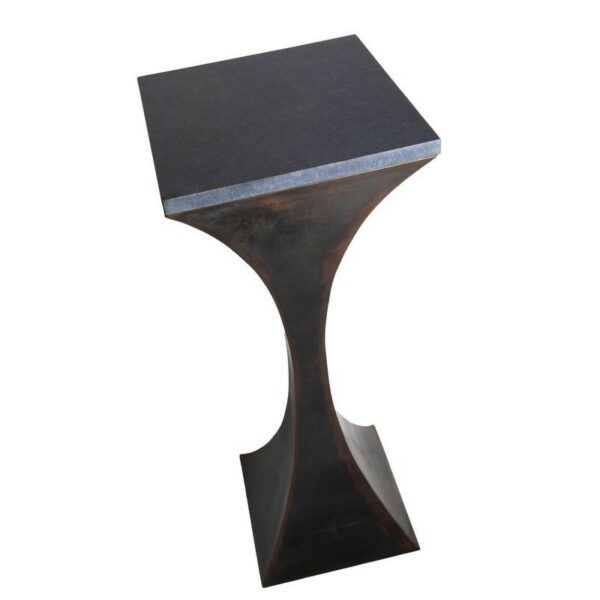
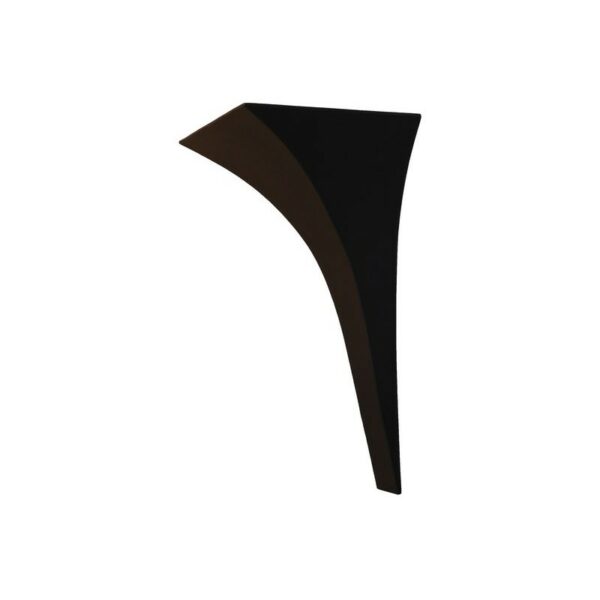
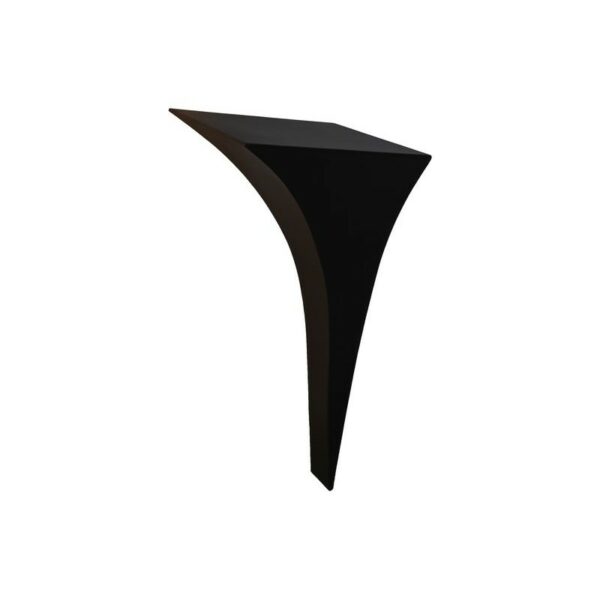
Four takes on the same format: the Solitaire (100 cm, 38 cm plate) is the reference pedestal, the one that suits most pieces. The Contemporanio keeps that format but slimmer (35 cm plate) with a matt finish: under a directional spot, it removes the reflections that catch the eye at base level. The Elegance is the customisable version of that format. And the Muralis wall pedestal solves the case where the floor is already taken.
Several nesting pedestals, for a series of works
As soon as there are two or more pieces in the same space, identical heights flatten the display. Nesting sets fix that: each base has its own height and plate, and the set stores in the footprint of the largest one.
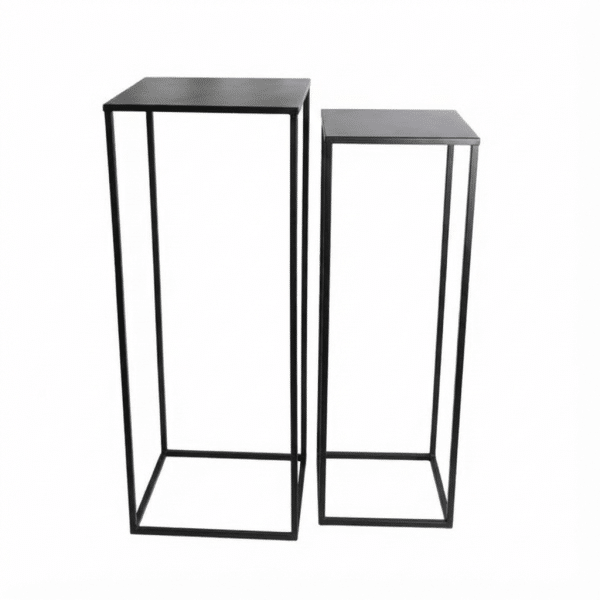
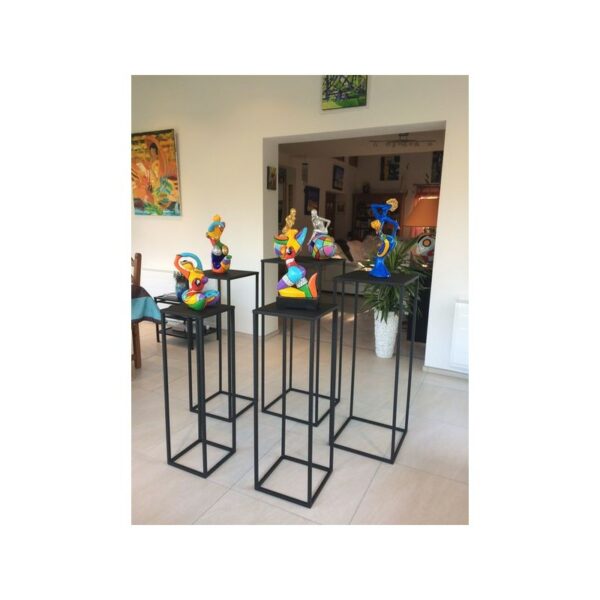
2 nesting metal pedestals – Duo
Original price was: 290,00€.250,00€Current price is: 250,00€.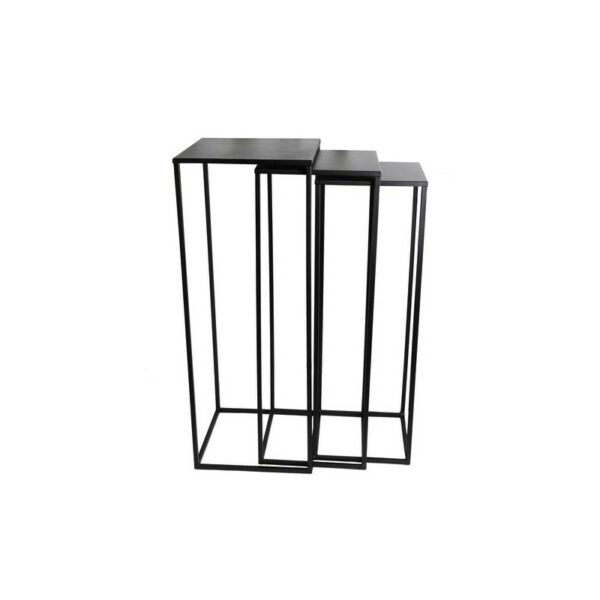
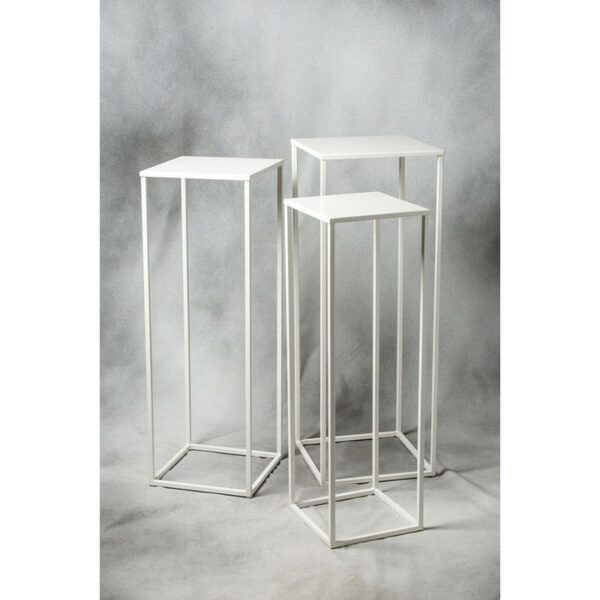
3 black/white metal sculpture bases
Original price was: 429,00€.400,00€Current price is: 400,00€.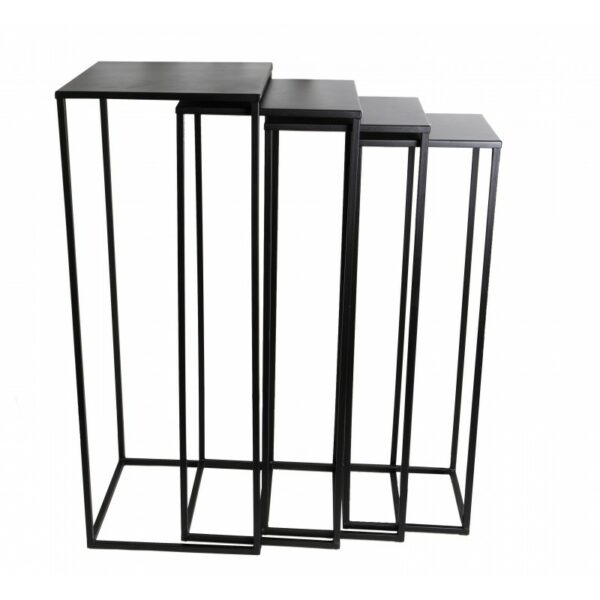
4 pedestals for heavy sculpture – Quatuor
489,00€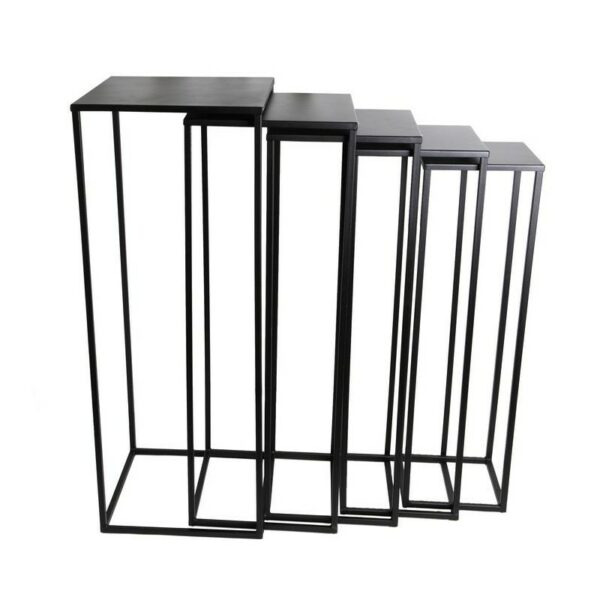
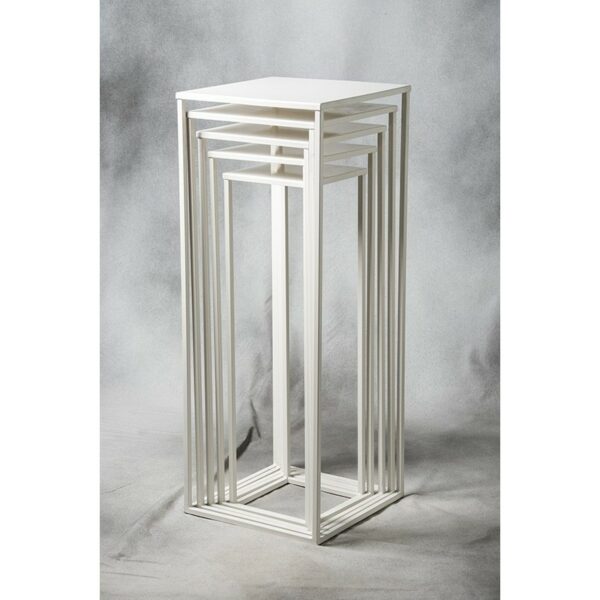
5 metal nesting pedestals – Penta
Original price was: 549,00€.529,00€Current price is: 529,00€.The Duo (2 bases, 95 and 100 cm) is the entry point and the best value for two bronzes. The Tertio (3 bases, 90 to 100 cm) is our best seller, enough on its own to compose a display corner. The Quatuor (4 bases, 85 to 100 cm) covers a full scenography. The Penta (5 bases, 80 to 100 cm) is the studio and art-fair set, when a lot has to be shown in little space.
That ability to nest is no detail: for a gallerist installing and striking shows, or an artist doing the fair circuit, it often decides the purchase before aesthetics do.
Display cases, tables and small formats
Not every piece is shown at 100 cm. A small sculpture on a table, a series of objects in a display case or a riser within an existing display all call for low formats.
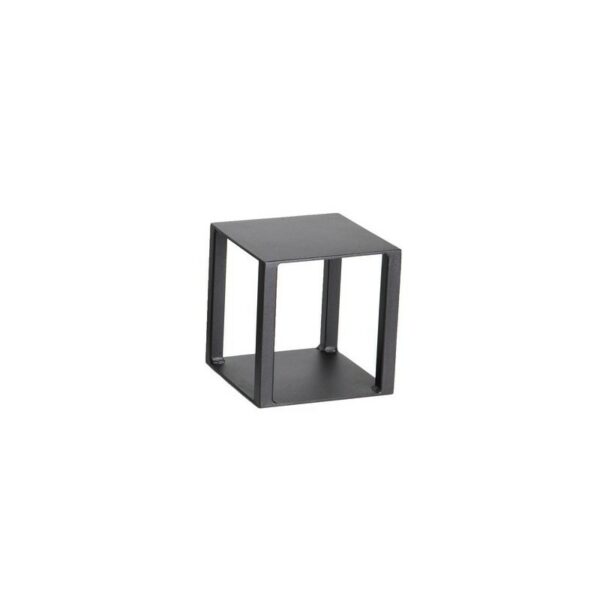
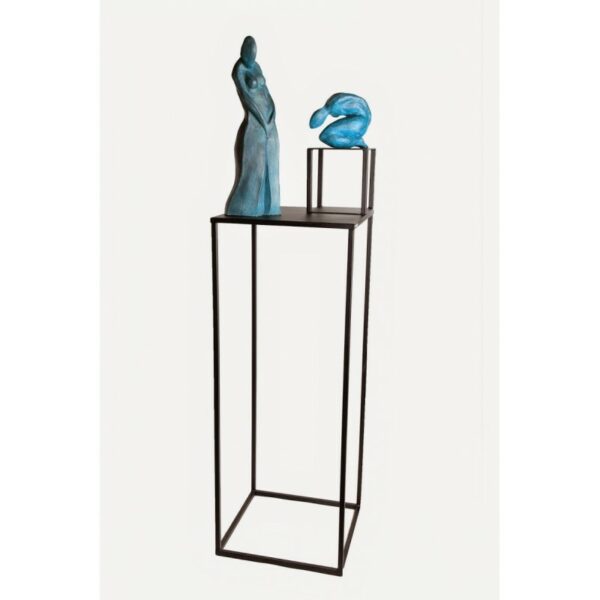
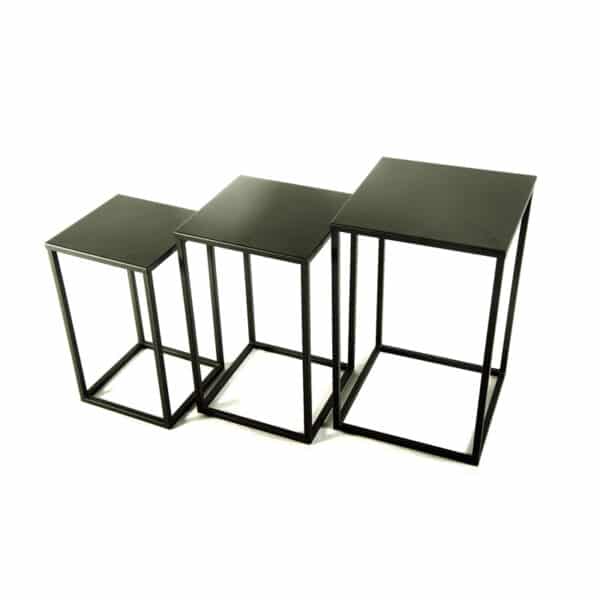
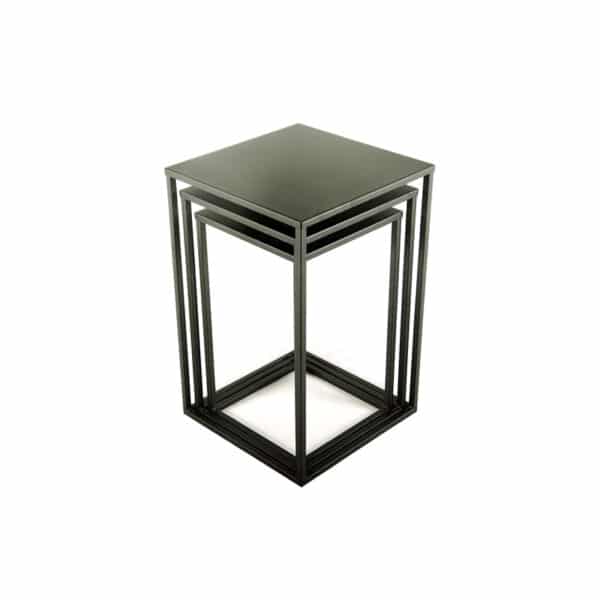
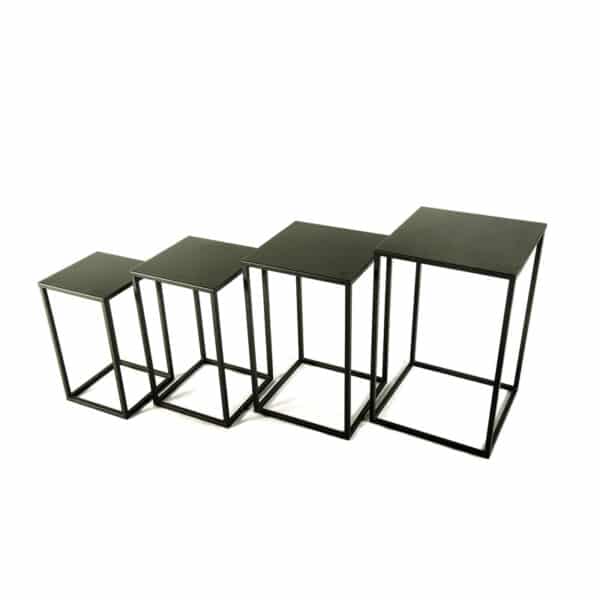
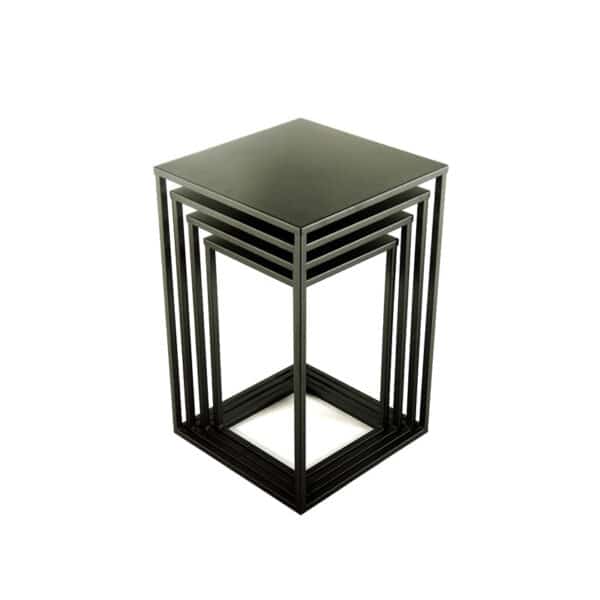
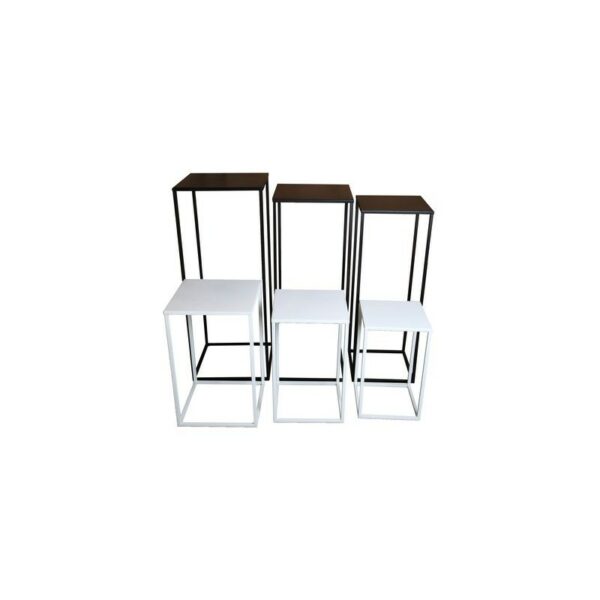
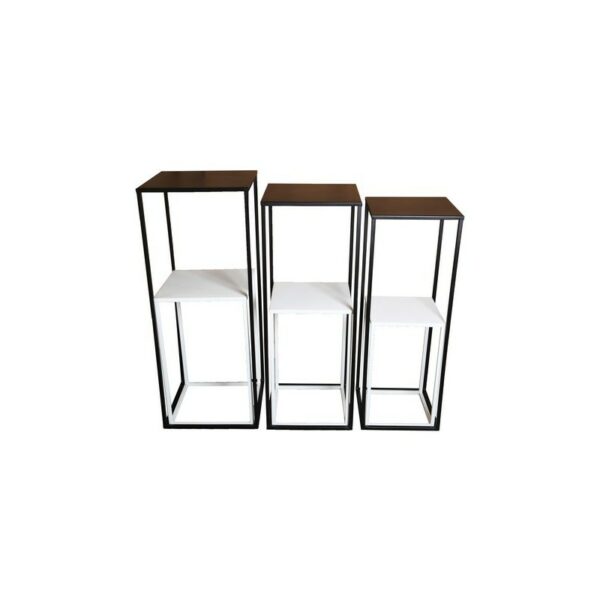
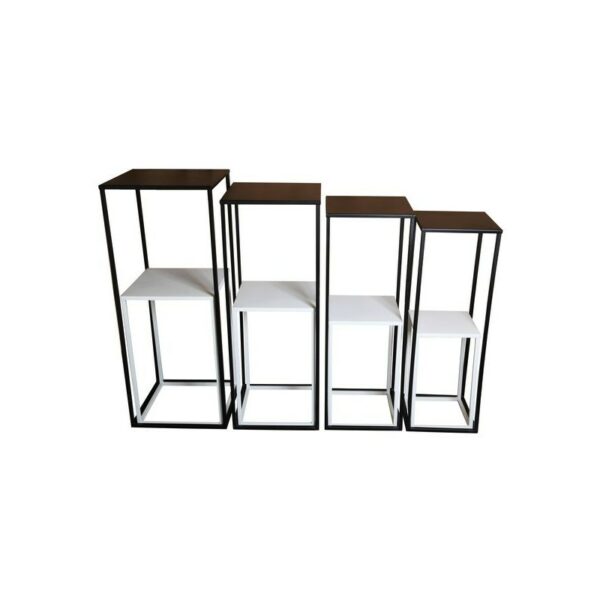
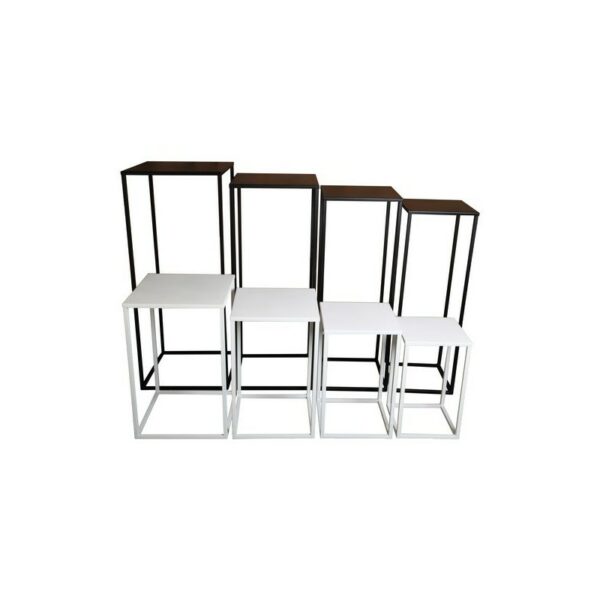
The Solitaire XS (19 cm cube) works as a riser or as a base for small pieces. The short versions Tertio (S) (45 to 55 cm) and Quatuor (S) (40 to 55 cm) apply the same nesting logic at table height. Finally, the complete sets Tertio + Tertio (S) and Quatuor + Quatuor (S) combine both scales: enough to equip a whole room in one order, with heights from 40 to 100 cm.
Why steel rather than wood or acrylic
The traditional pedestal is wooden, often lacquered MDF. It has two faults you do not see at purchase: it deflects under a prolonged load and it moves with humidity. A plate that has carried a bronze for six months keeps the mark.
Acrylic scratches and cracks outright under an impact or a point load. Stone and concrete hold perfectly but weigh so much they become immovable.
Welded steel does not creep, does not swell, takes repeated handling, and its self-weight stays compatible with transport by vehicle. That trade-off is why we make steel supports and nothing else.
Then there is the finish: black or white, matt. Black suits pale pieces (plaster, stone, white ceramic), white suits bronzes and dark patinas. When in doubt, black disappears more easily.
And if the work exceeds 50 kg?
Beyond that load, or as soon as the geometry of the piece is out of the ordinary — pronounced cantilever, support on a single rod, footprint wider than 38 cm — the catalogue is no longer enough. We then build to measure: internal reinforcement, thicker sheet steel, spreader plate, ballasting at the foot, floor anchoring for spaces open to the public.
Bespoke work starts from the dimensions, the weight and photographs of the piece, with around ten days of manufacture. Ask us to study your piece, or first read our guidance on the pedestal for a heavy sculpture.
Frequently asked questions
What is the difference between a pedestal and a base?
“Base” is the generic term for any support under an artwork. “Pedestal” describes a tall, slender base made to bring the piece up to eye level. In the trade, both words point to the same products.
What height should I choose for a sculpture pedestal?
Take 148 cm and subtract the height of the work’s point of interest. A bust whose face sits 48 cm above its base calls for a 100 cm pedestal; a low, spreading piece calls for 90 or 95 cm.
How much weight can a steel pedestal hold?
All our models are rated for a load of up to 50 kg per pedestal, under distributed load. Above that, we build a reinforced model to measure.
Why choose nesting pedestals?
Because they bring different heights to give a display its rhythm, and because they stack inside one another: the set travels and stores in the footprint of the largest base.
Are your pedestals made in France?
Yes. The whole range has been designed and manufactured in France at our industrial partner since 2015.
Choosing in three measurements
Measure your sculpture’s point of interest, measure its footprint, and weigh it. Those three figures point to the model in the carousels above — and if none of them fits, they are enough to start a bespoke study.
Unsure about a particular piece? Send us the dimensions, the weight and a photograph: we will tell you which pedestal suits it, or we will make it. See the full range of steel pedestals and bases.